Aim in CS2 comes down to three things: crosshair placement, recoil control, and consistent practice. You don’t need to grind for hours every day, short, focused sessions built around specific weaknesses will get you further than five-hour sessions with no structure. Most players see real improvement within two to four weeks.
Why aim matters more in CS2 than in most shooters
CS2’s time-to-kill is brutally low. One headshot can end a duel instantly, which means there’s almost no margin for error once a fight starts. Good positioning and utility usage create opportunities to shoot, but if you can’t hit your shots, none of that matters.
The mechanics reinforce this. Bullets follow predictable spray patterns. Accuracy drops completely while moving. This means aim in CS2 isn’t just raw mouse speed, it’s knowing when to shoot, how to control recoil, and where your crosshair needs to be before the duel even begins.
Fix your crosshair placement before anything else
Most players who struggle with aim aren’t losing duels because of poor mouse control. They’re losing because their crosshair is in the wrong position before the enemy appears.
When your crosshair sits at chest level or is pointed at a wall, you have to correct it the instant someone peeks, and in CS2, you don’t have that time. The fix is straightforward: keep your crosshair at head height and pre-aimed at the next likely enemy position every time you move around the map.
This single habit reduces how much correction you need mid-duel and immediately makes your aim feel more consistent. It’s also the fastest thing to improve because it’s awareness-based, not mechanical.
Stop changing your sensitivity
If you’re constantly tweaking sensitivity because something feels off, you’re resetting the muscle memory you’ve been building. Aim improvement requires repetitions of the same movement, your nervous system needs consistent inputs to lock in accurate, automatic responses.
Pick a sensitivity and commit to it for at least two to three weeks. Early discomfort is normal and doesn’t mean the sensitivity is wrong. It means you’re building new motor patterns.
Most competitive players land somewhere between 600 and 1200 eDPI (your mouse DPI multiplied by your in-game sensitivity). A common setup is 400 or 800 DPI combined with an in-game sensitivity between 1.5 and 3.0. There’s no universally correct number, find a range that lets you do a 180-degree turn in one full mousepad swipe, and stop adjusting from there.
The three aim fundamentals
Crosshair placement is the highest-leverage skill. Pre-aim at head height where enemies are likely to appear. Small corrections beat large ones every time.
Recoil control separates tap shooters from spray shooters. The AK-47 and M4 both have distinct, learnable spray patterns. Pull your mouse in the opposite direction of the recoil to keep bullets on target during extended fire. The Recoil Master workshop map is the best tool for drilling this in isolation.
Counter-strafing is what makes accurate shooting possible while playing dynamically. Tap the opposite movement key briefly before firing to stop your character instantly, bullets fired while still moving are highly inaccurate in CS2. It takes a few days to learn and a few weeks to make automatic under pressure.
How to structure your practice
Consistency beats volume. Thirty minutes every day produces better results than five hours once a week. Here’s a simple structure that covers the main bases:
Deathmatch — Use it as a daily warm-up before ranked, but go in with a specific goal. Pick one thing to drill per session: 100 headshot kills to practice first bullet accuracy and one-tapping, 100 spray kills to build recoil control under real pressure, or 100 burst kills to develop the discipline of controlled bursts. Mixing everything in one session dilutes the focus. One goal, one session. Public or community DM servers both work.
Aim Botz or CSStats Training Map — Workshop maps for drilling raw clicking speed and target switching. Useful for building the habit of snapping between targets quickly and accurately.
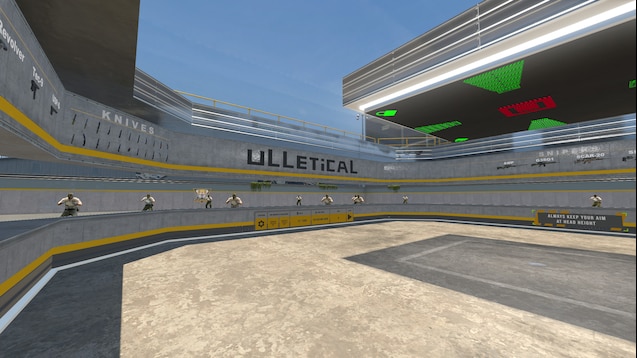
Recoil Master — Visualizes your spray pattern in real time. Spend focused time on the AK-47 and M4 before moving on to other weapons.
Prefire maps — Train you to anticipate enemy positions and fire before an enemy fully appears. Directly improves crosshair placement habits in real matches.
How long until you see results?
Crosshair placement tends to improve first, it’s habit-based, so awareness alone changes it quickly. Recoil control takes longer because it requires precise muscle memory for each weapon. Counter-strafing usually clicks within a few days but takes weeks to become automatic in live situations.
A simple way to track progress: run a Deathmatch session at the start of each week and notice how often you’re winning duels you would have lost before. Rank movement lags behind actual skill development because it reflects team performance and map knowledge too, so watch your duel win rate, not just your rating.
Two to four weeks of structured daily practice. That’s the realistic timeline for feeling a genuine difference.