CS2 has one of the most active skin economies in gaming. Millions of skins change hands every day across trading platforms, and some individual items sell for more than a used car. But if you’re new to it, or just want to understand how it all works, the whole thing can feel overwhelming fast.
This guide covers everything: what skins are, what they change (and don’t), how rarity and float values affect price, how to get them, and how to trade them safely.
What CS2 skins actually are
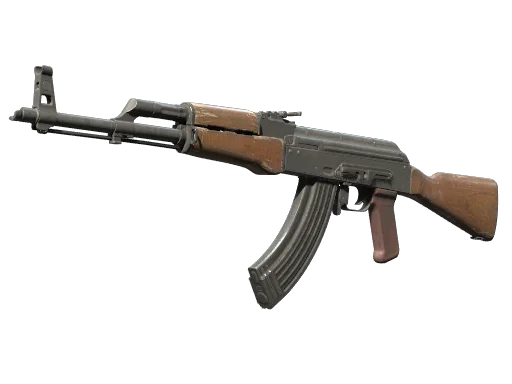
Skins are cosmetic designs that change the visual appearance of weapons, knives, and gloves in Counter-Strike 2. That’s it. They have zero effect on gameplay, a default AK-47 fires identically to a Factory New AK-47 Redline. The bullet goes to the same place, the recoil pattern is the same, the damage is the same.
What skins change is how your weapon looks, to you and, when you drop it or get killed, to everyone else. For a lot of players, that’s enough reason to care. For others, skins are assets: things to collect, trade, and in some cases hold as investments.
Skins exist for almost every weapon category in CS2:
- Rifles — AK-47, M4A4, M4A1-S, AWP, FAMAS, AUG, SG 553, and more → see our guides for the best AK-47 skins, best AWP skins, best M4A4 skins, and best M4A1-S skins
- Pistols — Glock-18, USP-S, Desert Eagle, P250, and others → see best Glock-18 skins, best USP-S skins, and best Desert Eagle skins
- Knives — Karambit, Butterfly, M9 Bayonet, Flip, and many more → see our CS2 knife tier list
- Gloves — Sport, Specialist, Moto, Driver, and others → see the best CS2 gloves
- SMGs, shotguns, and heavy weapons — MP9, MAC-10, Nova, and others also have skins, though they tend to be cheaper and less sought-after
Rarity tiers: what the colours mean
Every CS2 skin belongs to a rarity tier. The tier is shown as a colour on the skin’s item card and determines two things: how likely you are to get that skin from a case, and, roughly, how expensive it is.
Cases in CS2 use five standard rarity tiers for weapon skins, plus a separate roll for knives and gloves. These are the official drop rates disclosed by Valve:
| Tier | Colour | Case drop rate | What to expect |
|---|---|---|---|
| Mil-Spec | Blue | 79.92% | Most common drop, typically worth a few cents to a few dollars |
| Restricted | Purple | 15.98% | Common, budget-friendly, many solid-looking options here |
| Classified | Pink | 3.20% | Less common, prices start to get interesting, often $5–$100+ |
| Covert | Red | 0.64% | Rare, around 1 in 156 openings, often the most iconic skins |
| Knives & Gloves | Gold | 0.26% | Separate roll, roughly 1 in 385 openings, the most expensive items |
| Contraband | Orange | No longer drops | Only one skin: the M4A4 | Howl |
Note: Consumer Grade (white) and Industrial Grade (light blue) skins exist in the game but do not drop from weapon cases. You may see them through weekly Care Packages or in older skin collections.
A few important points:
Rarity doesn’t always equal value. A Mil-Spec skin with a great design and low float can be worth more than a Classified skin nobody wants. Popularity, aesthetics, and float value all play a role.
Knives and gloves are a separate roll. When you open a case, there’s roughly a 0.26% chance the game rolls for a knife or gloves before it even looks at the normal rarity tiers. This is why they’re so expensive, they’re rarer than Covert skins.
The Contraband tier has exactly one member. The M4A4 | Howl was pulled from cases in 2014 after a copyright dispute over the original artwork. It can never be unboxed again. All existing copies came from the Huntsman Case, and the supply only shrinks as accounts get banned or abandoned. Current prices range from a few thousand dollars for Battle-Scarred condition up to considerably more for Factory New, and StatTrak versions with rare stickers can reach far higher. Skin prices move constantly, so always check a live marketplace for current figures.
Float values and wear: why two identical skins can have different prices
Every skin in CS2 has a float value, a number between 0.00 and 1.00 that represents how worn the skin looks. Lower float = less wear = cleaner appearance. Higher float = more scratches, grime, and wear marks visible on the model.
Float values map to five named conditions:
| Condition | Float range | What it looks like |
|---|---|---|
| Factory New (FN) | 0.00 – 0.07 | Clean, minimal wear |
| Minimal Wear (MW) | 0.07 – 0.15 | Barely noticeable wear |
| Field-Tested (FT) | 0.15 – 0.38 | Visible but moderate wear |
| Well-Worn (WW) | 0.38 – 0.45 | Clearly worn |
| Battle-Scarred (BS) | 0.45 – 1.00 | Heavy wear, scratches, grime |
Here’s where it gets interesting: within each condition, the exact float still matters. A Minimal Wear skin with a 0.075 float looks almost identical to Factory New, traders call these “FN-look” MW skins, and they often sell for more than a standard MW because of the visual quality. Meanwhile a 0.149 float MW looks much more worn and is usually priced lower.
The float value is fixed when a skin is unboxed or dropped, it never changes. You can check a skin’s exact float value using the in-game inspect button, or on a trading platform like Skinvault that shows float values on every listing.
Some skins are also float-capped, meaning they can’t exist in every condition. The AWP | Asiimov, for example, has a minimum float of 0.18, there is no such thing as a Factory New or Minimal Wear Asiimov.
For a complete breakdown of float values and how they affect pricing, read our CS2 Float Guide.
StatTrak and Souvenir: the two special variants
Beyond rarity and float, two special variants add another layer to skin values.
StatTrak skins have a kill counter built into them, a small orange display on the weapon that tracks how many kills you’ve recorded with that skin. StatTrak versions exist across most rarity tiers and typically cost more than the standard version of the same skin. Approximately 10% of case drops are StatTrak, applied on top of whichever rarity you rolled, so a StatTrak knife works out to roughly 0.026%, or about 1 in 3,850 case openings.
Souvenir skins are dropped from packages during CS2 Major championships. They come with four gold stickers applied, one for the event, one for the map, and one each for the two teams playing the match you were watching when the package dropped. High-tier Souvenir skins from iconic matches (particularly older Majors) can be extraordinarily valuable. A Souvenir AWP | Dragon Lore from a Cobblestone match featuring a legendary player sticker is worth hundreds of thousands of dollars.
Standard Souvenir skins from recent Majors are much more accessible, but if you want a specific one, buy it on the market rather than opening packages. Covert skins from souvenir packages drop at roughly 0.026%, which is about 25 times rarer than Covert items from regular weapon cases.
How to get CS2 skins
There are four main ways to acquire skins:
1. Weekly Care Packages If you have Prime Status, you receive one Weekly Care Package per week after earning your first profile rank-up of the week (5,000 XP). The game presents four items and you pick two. The drops tend to be lower-value, cases, collection skins, and graffiti, but they’re free and can be traded or sold.
2. Opening cases Cases typically cost between a few cents and a few dollars to buy on the market, plus a $2.49 key purchased in-game to open them. Each case has a fixed list of skins across the rarity tiers, and you get one random skin per opening. Given the official drop rates, the expected value of a case opening is almost always less than the cost of the key. Opening cases is entertainment, not investment strategy.
Read our Ultimate Guide to CS2 Cases and Best CS2 Cases to Open for more.
3. The Steam Community Market You can buy and sell skins directly through Steam. It’s the most familiar option for new players, but Steam takes a 15% fee on every transaction, 5% to Steam, 10% to Valve as the game developer. That fee comes out of the seller’s cut, which means sellers walk away with significantly less than the listed price.
The other major limitation: money earned on the Steam Market stays locked in your Steam wallet. You can’t withdraw it as cash.
4. Third-party trading platforms Most experienced traders use third-party platforms instead of the Steam Market. Without Steam’s 15% fee, sellers can price more competitively, and buyers benefit directly from that. On Skinvault, skins are typically around 35% cheaper than the Steam Community Market price.
You can buy CS2 skins on Skinvault or trade your existing skins for ones you actually want to use.
What else determines a skin’s price
Rarity and float are the two most important factors, but several others play a role:
Pattern index — some skins (most famously the AK-47 | Case Hardened and the Karambit | Case Hardened) have randomised patterns. Certain pattern indexes, particularly those with high blue coverage, known as “Blue Gems”, are so sought-after that a single pattern can turn a $20 skin into one worth tens of thousands of dollars.
Stickers — applied stickers can significantly change a skin’s value, especially rare tournament stickers from older Majors. Katowice 2014 holo stickers are among the most valuable items in the entire CS2 economy.
Popularity — some skins are more iconic. The AK-47 | Redline, AWP | Asiimov, and M4A4 | Howl have sustained demand across all player levels. Obscure skins in the same rarity tier may sit unsold for weeks.
Supply — older cases that are no longer actively opened have lower supply entering the market. Discontinued skins from old operations are particularly scarce.
Trading skins safely
Skin trading is largely safe when you use reputable platforms, but there are real risks worth knowing.
Trade locks — when you receive a skin via trade, it’s locked from being traded again for seven days and marked with a yellow shield icon in your inventory. This is Valve’s Trade Protection system, introduced in July 2025. During this window, the item is fully usable in-game but can’t be re-traded, modified, or consumed. Factor this in if you’re planning to flip items quickly.
Trade reversals — the same system lets either party reverse all trades from the past seven days in one click, returning items to their original owners. It’s designed as an emergency tool for account compromise or scams, not for changing your mind, triggering it earns a 30-day trading ban. The practical risk for buyers: if you pay someone outside an established platform and they reverse the Steam trade, you lose your money with no recourse.
API key scams — a common scam involves tricking you into sharing your Steam API key with a phishing site, which then intercepts and redirects your trade offers. Only ever enter your Steam API key on sites you’ve verified. Reputable platforms will explain exactly how to set your key safely.
Phishing sites — some sites impersonate legitimate trading platforms with nearly identical URLs. Always bookmark the sites you use and navigate directly from your bookmarks, not from search results or links in chat.
For a full breakdown of how the Trade Protection system works and how to stay safe, read CS2 Trade Protection Explained.
The bottom line
CS2 skins are cosmetic items that don’t affect gameplay but have built a genuine economy around them, one with real price dynamics, investment logic, and a passionate community. Understanding rarity tiers, float values, and where to buy tells you most of what you need to navigate it.
If you’re just getting started, the best place to begin is with a budget: decide how much you want to spend and work backwards from there. Our budget skin guides can help you build a solid loadout without overpaying.
If you’re ready to pick up specific skins, you can browse the full inventory at Skinvault where prices are consistently below the Steam Market rate.