To spray transfer in CS2, hold down Mouse 1 through your first kill, then smoothly drag your crosshair onto the next target while continuing to compensate for recoil. The key is keeping your mouse moving in the opposite direction of the gun’s kick so your shots stay on target during the transition. This guide breaks down the mechanics, common mistakes, and the most efficient ways to build this skill.
What exactly happens during a spray transfer?
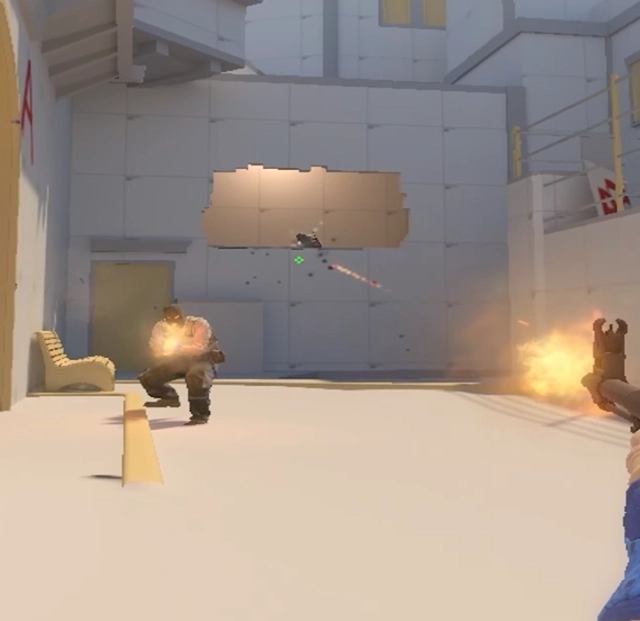
A spray transfer in CS2 is the act of moving sustained, recoil-compensated fire from one enemy to another without releasing the trigger. You maintain your spray pattern compensation throughout the transition, dragging your crosshair to the new target mid-magazine while the gun continues to fire. The goal is to land bullets on the second target without resetting the spray.
What makes this different from simply re-aiming is that the recoil pattern does not reset between targets. When you keep Mouse 1 held, the weapon continues along its spray pattern regardless of where you move your crosshair. This means your mouse movement during the transfer must account for both the drag toward the new target and the ongoing recoil compensation simultaneously. Those two inputs happen at the same time, which is what makes the technique genuinely difficult to execute cleanly.
What are the steps to execute a spray transfer correctly?
To execute a spray transfer correctly, keep Mouse 1 held after your first kill, identify your next target immediately, and drag your crosshair toward them while continuing your recoil compensation. If the gun is currently pulling right in its pattern, you must drag left to compensate while also moving toward the new enemy. The transfer works best within the first 10 to 15 bullets.
- Start with a controlled spray on the first target. Trace the recoil pattern downward and left, then right, to keep bullets on the enemy. Secure the kill without releasing the trigger.
- Identify your second target before the first dies. Pre-aiming your transfer destination cuts the reaction time between kills significantly.
- Drag your crosshair smoothly toward the next enemy. Avoid snapping or flicking. A smooth drag keeps your compensation consistent.
- Continue compensating for the current bullet in the pattern. The pattern does not pause. If the gun is mid-leftward pull, your drag must account for that pull while also moving toward the target.
- Watch bullet impacts, not just your crosshair. Tracking where bullets actually land helps you make micro-adjustments in real time rather than relying entirely on crosshair position.
Rifles like the AK-47 and M4A4 have their most manageable recoil in the first 10 to 15 bullets. Attempting a spray transfer beyond that range introduces heavy leftward drift in the pattern, which is much harder to control while also changing targets. Staying within that early window gives you the best chance of landing bullets on the second enemy.
Why does the spray go off-target after transferring?
The spray goes off-target after a transfer because players stop compensating for recoil the moment they begin dragging toward the new target. The instinct to aim at the enemy overrides the muscle memory of the recoil trace, so the gun’s kick goes uncontrolled for a fraction of a second. That brief lapse sends bullets wide of the new target.
A second common cause is dragging too fast. Snapping the crosshair to the next enemy introduces a sudden change in mouse direction that breaks the smooth compensation rhythm. The recoil pattern continues on its own trajectory while the crosshair jumps, creating a mismatch between where you are aiming and where bullets are actually going. Slower, more deliberate drags keep both movements in sync. Focusing on bullet impacts rather than the crosshair itself helps identify these mismatches earlier and correct them before the magazine runs out.
How is spray transfer different from flicking between targets?
A spray transfer keeps Mouse 1 held throughout the move to a new target, maintaining a continuous spray with ongoing recoil compensation. A flick between targets involves releasing fire, snapping to the new enemy, and re-engaging, which resets the spray pattern. Spray transfers are faster but technically harder; flicks are more forgiving but cost time and bullets.
Flicking is often the better choice when targets are far apart or when you have already fired past 15 bullets and the spray pattern has become unpredictable. Releasing Mouse 1 for even a brief moment resets the recoil, giving you a clean first-bullet advantage on the next target. Spray transfers are most valuable when enemies are close together, when you need to eliminate multiple targets quickly, or when the second enemy is already taking damage from teammates and needs only a few more hits. Choosing between the two techniques is a situational decision, not a matter of one being strictly better than the other.
How can you practice spray transfers efficiently?
The most efficient way to practice spray transfers is to combine recoil pattern training with live transfer drills using bots. Start by mastering the spray pattern on a static wall, then introduce moving targets to simulate real transfer scenarios. Consistent short sessions focused on feel and feedback produce faster improvement than long, unfocused practice.
Wall spraying for pattern memory
Stand in front of a blank wall and fire full magazines while tracing the recoil to keep all bullets in a tight cluster. The goal is not to memorize the pattern visually but to build the physical muscle memory of the mouse movements. Workshop maps like Recoil Master from the Steam Workshop display your spray pattern visually, which accelerates this process by giving you immediate feedback on where your compensation is breaking down.
Bot drills for live transfer practice
Once the base pattern feels consistent, move to a map like Aim Botz and set bots to respawn, or place multiple bots in a line. Practice spraying one bot down and immediately dragging to the next without releasing the trigger. Start with bots that are close together and gradually increase the lateral distance between them as your transfers become cleaner. This trains your brain to handle both the recoil compensation and the crosshair movement as a single combined input rather than two separate actions.
Short, focused sessions of 10 to 15 minutes tend to produce better results than long grinding sessions where fatigue degrades your form. Spray transfer technique relies heavily on consistent mouse movement, and practicing with poor form reinforces bad habits rather than building reliable skill.