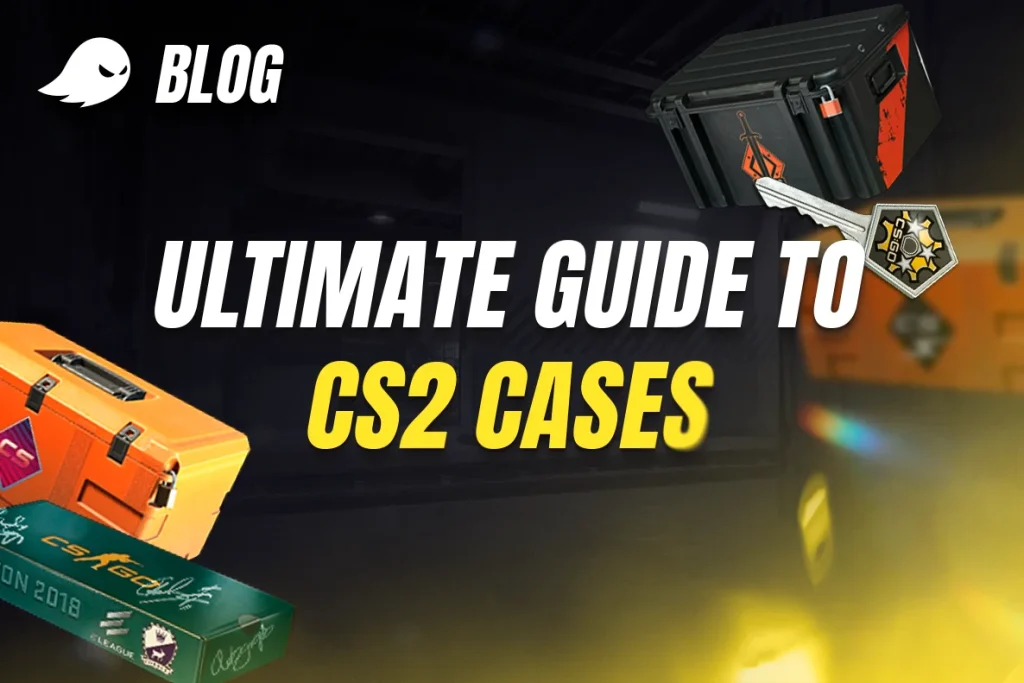
CS2 cases are the heart of Counter-Strike 2’s skin economy. These digital containers hold weapon skins that players collect, trade, and show off in matches. This guide covers everything you need to know about CS2 cases.
You’ll learn how cases work, what types exist, and how the rarity system determines what you get. We’ll also cover smart ways to choose cases and clear up common myths about case opening.
What are CS2 cases and how do they work
CS2 cases are virtual containers that work like mystery boxes in Counter-Strike 2. Each case contains a predetermined collection of weapon skins, and when you open one, you receive a random skin from that specific collection. Think of them as digital loot boxes that add visual variety to your weapons.
The case system has been part of Counter-Strike since 2013, when Valve introduced the first weapon case through the Arms Deal update. Since then, cases have become the primary method for introducing new skins into the game’s economy. Each case release typically coincides with game updates and features themed skin collections.
To open a CS2 case, you need two things: the case itself and a matching key. Keys cost $2.50 in the in-game store and each key type only works with its corresponding case. When you use a key, it’s consumed immediately.
The opening process is straightforward. Navigate to your CS2 inventory, select the case you want to open, and open the case. A roulette-style animation plays, building suspense before revealing your skin. The entire process takes less than a minute, and your new skin automatically appears in your inventory.
Cases operate on a random drop system with fixed probabilities. Every time you open a case, you have the same odds of getting each rarity tier – previous results don’t affect future outcomes. The system doesn’t care if you’ve opened 10 cases or 1,000; each opening is an independent event with identical odds.
Complete breakdown of CS2 case types and collections
CS2 currently features +40 different weapon cases, each with its own unique skin collection. Understanding the different case categories helps you find skins that match your style.
Classic weapon cases
The original CS:GO Weapon Case series (1-3) started it all. These cases contain nine weapon skins each, plus the first cosmetic knives in Arms Deal finishes. While older, these cases still drop popular skins that many players want for their collections.
Operation cases
Operation cases release alongside major game events and contain exclusive themed skins. Notable examples include Operation Bravo, Phoenix, Breakout, Vanguard, Falchion, Wildfire, Hydra, Shattered Web, Broken Fang, and Riptide cases. These often feature more elaborate designs and unique colour schemes tied to their operation themes.
Community-designed cases
Valve regularly releases cases featuring skins created by the CS2 community. The extensive list includes Winter Offensive, Huntsman, Chroma series (1-3), Shadow, Revolver, Gamma series (1-2), Glove, Spectrum series (1-2), Clutch, Horizon, Danger Zone, CS20, Prisma series (1-2), Fracture, Snakebite, Dreams & Nightmares, Recoil, Revolution, and Kilowatt cases. Yellow cases specifically support skin creators, with revenue sharing built into their sales.
Special edition cases
eSports cases (2013, 2013 Winter, and 2014 Summer editions) directed a portion of their key revenue to support the eSports community. When you bought keys for these cases, you were contributing to tournament prize pools and the growth of professional CS.
Souvenir packages deserve special mention. These drop during major tournaments and contain skins with special stickers commemorating the event, teams, and players. Unlike regular cases, souvenir packages don’t require keys to open and don’t include any rare special items, such as knives or gloves.
Understanding case contents and rarity systems
Every CS2 case follows a strict rarity system that determines what skins you can receive. Understanding these tiers helps set realistic expectations for case opening.
Each case contains specific skins for each rarity tier. When you open a case, the game first determines which rarity tier you’ll receive based on fixed probabilities, then randomly selects a skin from that tier’s available options.
Common Case Opening Drop Rates (for standard cases)
Mil-Spec (Blue): Approximately 79.92% chance
Restricted (Purple): Approximately 15.98% chance
Classified (Pink): Approximately 3.20% chance
Covert (Red): Approximately 0.64% chance
Special Item (Knife/Glove): Approximately 0.26% chance
StatTrak and wear conditions
Two additional factors affect the skins you receive: StatTrak technology and wear condition. StatTrak skins track your kills with that weapon and are roughly 10 times rarer than their regular counterparts. If a case contains StatTrak versions, you have about a 10% chance of receiving one.
Wear conditions range from Factory New to Battle-Scarred:
- Factory New (0.00-0.07 float value)
- Minimal Wear (0.07-0.15 float value)
- Field-Tested (0.15-0.38 float value)
- Well-Worn (0.38-0.45 float value)
- Battle-Scarred (0.45-1.00 float value)
The float value determines how worn your skin looks, with lower values meaning better condition. This directly impacts both appearance and market value.
How to choose cases that match your collection goals
Smart case selection starts with knowing what you want. Are you after specific weapon skins, hunting for a particular knife finish, or building a colour-coordinated loadout? Your goals shape which cases make sense for you.
For players wanting colourful, vibrant skins, the Prisma and Prisma 2 cases offer some of CS2’s most eye-catching designs. The Chroma series (1-3) focuses on colour-themed collections with matching knife finishes. If you prefer military-style realism, older cases like the CS:GO Weapon Case series or Operation cases often feature more subdued, tactical designs.
Budget considerations
Case prices vary significantly on the Steam Community Market. Newer cases typically cost more in the beginning but contain the latest skin designs. The oldest cases usually are the most expensive because the older expensive skins. Remember to factor in the $2.50 key cost when budgeting for case opening.
Some collectors focus on specific weapon types. If you mainly use the AK-47 and AWP, research which cases contain skins for these weapons in higher rarity tiers. The Revolution case, for instance, includes the popular AK-47 Head Shot in its Covert tier.
Knife hunting strategies
Every weapon case includes knife skins as exceedingly rare special items. Different cases contain different knife types and finishes. The Gamma cases introduced Gamma Doppler finishes, while the Glove case was the first to include glove skins alongside knives. Research which cases contain your dream knife before opening.
Pro tip: Check current market prices for the skins in each case. While you shouldn’t expect profits from case opening, knowing the potential outcomes helps you make informed decisions about which cases align with your collection goals.
Case opening best practices and common misconceptions
The biggest myth in CS2 case opening is that timing or patterns affect your results. The truth is simple: every case opening uses a fixed probability system that never changes. Opening cases at 3 AM doesn’t improve your odds. Neither does opening multiple cases in quick succession or waiting for “lucky” moments.
Some players believe that new accounts have better luck or that Valve adjusts drop rates during sales. These are misconceptions. The probability system remains constant regardless of account age, purchase history, or any other factor. Each case opening is an independent event with identical odds.
Setting realistic expectations
Understanding the actual odds helps prevent disappointment. Most case openings result in Consumer Grade or Industrial Grade skins worth less than the key price. Knife drops are exceedingly rare – expect to open hundreds of cases before seeing one, if ever. This isn’t pessimism; it’s mathematics.
Common mistakes to avoid:
- Chasing losses by opening more cases after bad results
- Believing in “hot streaks” or “due” rare drops
- Opening cases as a way to make money
- Falling for third-party sites claiming better odds (many are scams)
Responsible collecting
Treat case opening as entertainment, not a path to rare skins. If you want specific skins, buying them directly from the Steam Community Market is almost always cheaper than trying to unbox them. Set a budget for case opening and stick to it.
For players who enjoy the excitement of case opening, consider spacing out your openings rather than bulk opening. This extends the entertainment value and helps maintain perspective on the random nature of the system.
Remember that CS2 cases are designed for fun and collecting, not profit. The house always has an edge, and the vast majority of players spend more on keys than they receive in skin value. Enjoy the process, celebrate when you get something cool, and never spend more than you’re comfortable losing. That’s the key to happy skin collecting in CS2.